



The Differences Between Uniform Rental and Direct Purchase Managed AR / FR Clothing Programs
Understanding Uniform Rental Service Issues
Breaking Free from Uniform Rental Reliance
Benefits of Direct Purchase Managed Programs Over Uniform Rental
How to Choose the Right Protective Uniform Supplier
- Evaluating a Supplier’s AR / FR Products
- Key Considerations for AR / FR Product Evaluation
- AR / FR Clothing Program Models
- Direct-Purchase Choice Programs with Home Laundering
- Uniform Rental with Industrial Laundry Programs
- Other Clothing Program Attributes to Research
Home Laundering or Industrial Laundering: Which is Best for FR Clothing?
Chapter 6: How to Choose the Right Protective Uniform Supplier
There are a wide range of options related to price, quality, performance, and overall value when selecting arc-rated and flame resistant (AR / FR) clothing and a supplier to manage your clothing program. Not only is it essential that your workers are protected against arc flash and flash fire hazards, but it’s also important that your budget is respected and enforced.
The two factors that affect your bottom line the most include:
-
-
- The cost and value of your protective garments.
- The type of program your AR / FR clothing supplier provides.
-
Evaluating a Supplier’s AR / FR Products
Assessing Hazards to Determine Protection Levels
Once you’ve identified the hazards your workers face, it’s essential to determine the specific level of protection required. Overestimating your protective needs can limit options, subjecting employees to the unnecessary comfort tradeoffs of higher-rated garments – at a higher cost to your organization. However, underestimating your protective needs can have much worse consequences.
Once you've identified the precise level of protection needed, you can focus on other factors – such as comfort, durability, style, fit, and breathability – to drive your product purchasing decisions.
Why Supplier Diversity Matters in a Managed Clothing Program
Take a look at the supplier’s product mix. The supplier you choose should have strong relationships in place to offer a wide range of products for maximum choice.
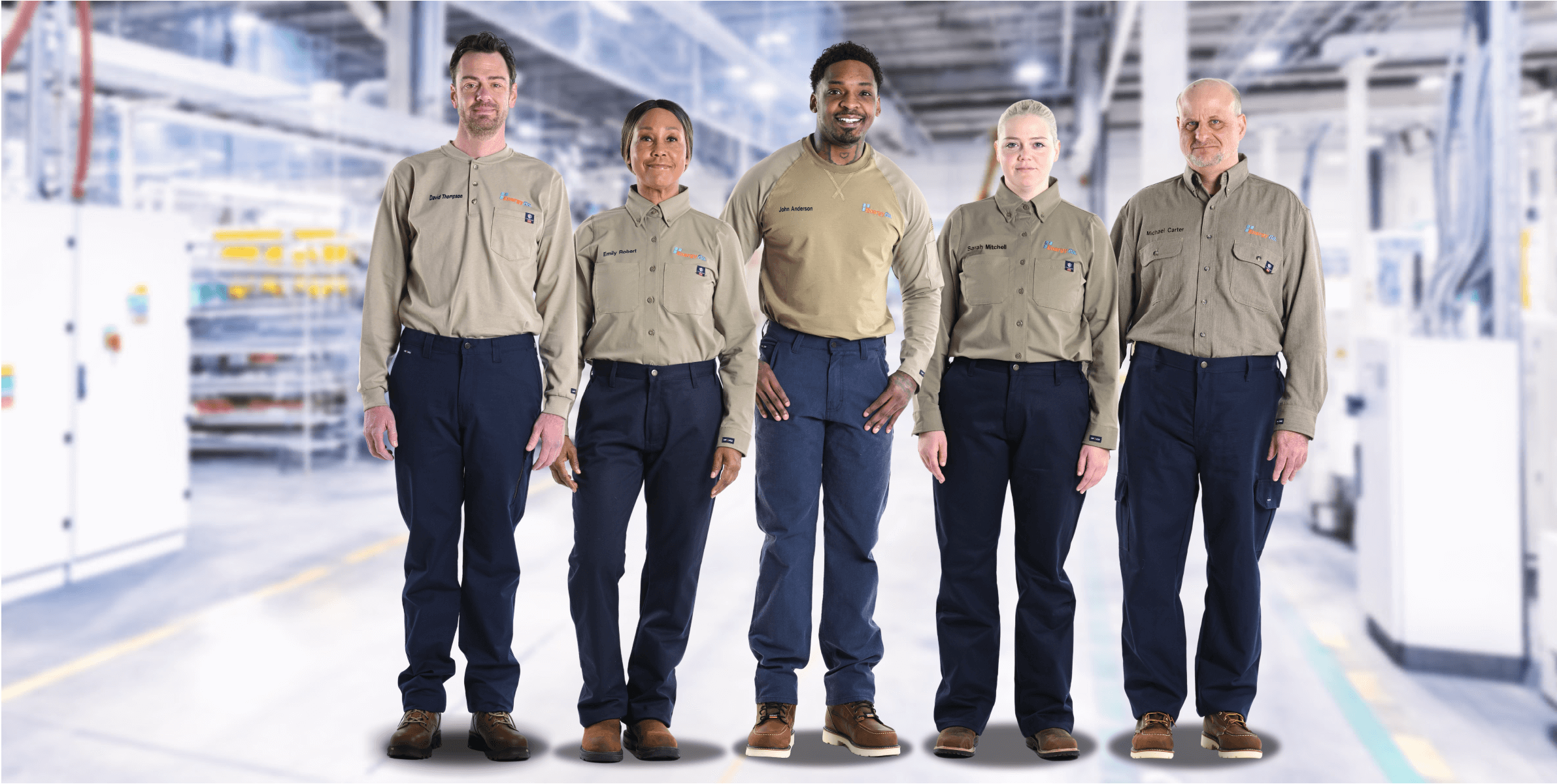
Including a reasonable array of styles, colors, weights, fabrics, and brands in your customized AR / FR clothing program (all meeting your company’s protective, budgeting, and company image needs) means workers can choose comfortable garments that fit properly and are appealing to wear.
Boosting Compliance Through Worker-Preferred Garments
Consequently, when workers are happy with their clothing selections, they are more likely to wear the required clothing and wear it properly, reducing compliance issues for the company.


4 Key Considerations for AR/FR Clothing Evaluation
1. Quality Assurance
In protective clothing, quality is non-negotiable—workers’ safety depends on it. Ensure your supplier adheres to robust quality control processes for both AR / FR fabrics and finished garments. Look for evidence of rigorous inspections and testing to verify garments meet or exceed performance standards. Additionally, evaluate construction details such as double- or triple-needle stitching and reinforced stress points, which enhance durability and extend wear life.
2. Women’s AR / FR Clothing
A comprehensive AR / FR program must include properly designed garments for women. Women’s protective clothing is not simply resized men’s apparel—it is tailored to fit their unique needs, ensuring safety, comfort, and functionality. A leading supplier should provide a wide selection of women’s garments, constructed with the same quality and features as those for men, to offer equitable protection and satisfaction.
3. Clear and Compliant Labeling
Labels are a vital safety component of protective garments. They display key information, such as protective ratings and fabric sources, which simplifies compliance checks and ensures quick identification. Proper labeling saves time for safety teams and management while ensuring workers’ clothing meets necessary standards.
4. Audit Trail and Tracking
Garment tracking systems enhance accountability and provide valuable safeguards:
-
-
- OSHA Compliance: Maintain detailed records of which employees received specific garments, streamlining audits and compliance checks.
- Product Recall Readiness: In the rare event of a recall, tracking enables suppliers to notify affected users promptly, minimizing risk and disruption.
-
AR / FR Clothing Program Models
When choosing a supplier, it’s essential to understand the type of program they offer to provide the protective clothing workers need to stay safe on the job.
There are four predominant types of AR / FR garment distribution models, offering varying degrees of service:
-
-
- Direct-purchase choice programs enable you to provide stipends in the form of clothing allowances or allotments for individual employees to purchase necessary AR / FR clothing.
- Uniform rental with industrial laundry programs supply garments and facilitate regular pickup, laundering, and drop-off of clothing for a weekly fee.
- Storeroom programs typically maintain high inventory levels for on-demand product distribution. This model is supported through bulk purchase and bulk delivery but is limited in product variety and subject to distribution challenges.
- Retail providers include online retailers or traditional brick-and-mortar stores that – in limited areas – offer AR / FR clothing, providing immediate access to products. However, a lower level of service is typical, leading to challenges in enforcing employee spending and maintaining an OSHA audit trail.
-
Direct-Purchase Choice Programs with Home Laundering
A direct-purchase program ensures 100% budgetary control. While the first-year cost of the contract can be slightly higher, overall costs for the life of the average three-year contract are generally significantly lower when compared to a uniform rental with industrial laundry program. Direct-purchase programs don’t waste your money since you won’t be billed for services not actually rendered, and there are no hidden costs in these types of contracts.
In direct-purchase programs, employees choose the garments they wish to buy from a pre-approved catalog with company-established parameters. Typically, products can be added at any time to this type of program, allowing you to take full advantage of fabric innovations or new product introductions.
Home laundering of AR / FR clothing has been proven to be a cost-effective alternative to industrial laundry. If washing instructions are followed, your employees can rest assured that their garments are protecting them the way they should throughout their useful wear life.
By offering workers a choice of apparel based on a wide selection of styles and personal fit – while still meeting company safety standards and industry regulations – you’re choosing a program that directly contributes to your company’s bottom line through increased employee satisfaction and productivity.
Uniform Rental with Industrial Laundry Programs
At a basic level, employees in this type of program are set up with an initial allotment of garments (shirts, pants, coveralls, etc.).
The laundry service provider delivers fresh garments and picks up dirty clothes from the customer. Garments handed in for laundering are taken off-site to the laundry facility, where they are sorted, inspected, and cleaned. Clean clothing is sorted again and delivered back to the customer.
Rental and laundry programs usually don’t allow for spending accountability or budget control. Hidden costs for damaged garments and other ancillary charges – expenses that often can’t be budgeted or verified – translate into higher total contract costs.
Other costs that often drive up the expense of these types of programs include underwash, contract buy-out clauses, and repair services.
Often invoices and statements are unclear, making the administrative burden of reconciling charges complicated and time-consuming.
Furthermore, individual employees have no choice in the garments they wear, and typically new products cannot be added during the contract period without significant additional investment by the customer.
Other Clothing Program Attributes to Research
When evaluating a program for your company, look beyond the general program types to consider other key attributes, including:
Technological Capabilities
Begin by assessing the supplier’s website, but dig deeper to find answers to the questions below, particularly when evaluating direct-purchase programs:
-
-
- Does the supplier offer a custom online catalog, and if so, is it reliable and easy to use?
- Does their online catalog offer enhanced features, such as the ability to filter by in-stock garments ready for quick delivery?
- Is order information easy to find, and are estimated delivery dates provided for each item ordered?
- Is strict spend enforcement maintained through comprehensive allowance or allotment programs that include customized reporting and billing information?
- Do they provide advanced technological resources, such as an app to identify the combined protection levels of layered garments?
-
Flexible Ordering Process
Employee satisfaction is greatly affected by the ease of ordering. Be sure to ask these questions:
-
-
- Can your employees order the way they prefer – online, by phone, or by email?
- Is online ordering efficient, secure, and user-friendly?
- Do they offer a mobile app for ordering?
- Is a live web-chat available to provide ordering assistance?
- If considering an employee allowance program, can employees use a personal payment method to spend beyond their company-funded allowance?
-
Comprehensive Delivery Services
Look for these important details:
-
-
- Individualized delivery to employees’ work or home locations
- Packing lists that include care instructions and return information
-
AR / FR clothing suppliers bring the two most important components of your program together – connecting finished products with employees. Because they put a face on the product and directly manage the total experience, AR / FR clothing suppliers typically play the largest role in overall customer satisfaction regarding protective clothing. So, it’s essential to look beyond the dollar-value cost of any program and consider the program’s overall value. Be sure your supplier can provide a wide selection of high-quality products and a clothing program to save your company – and employees – time, money, and headaches.