





October 30, 2026
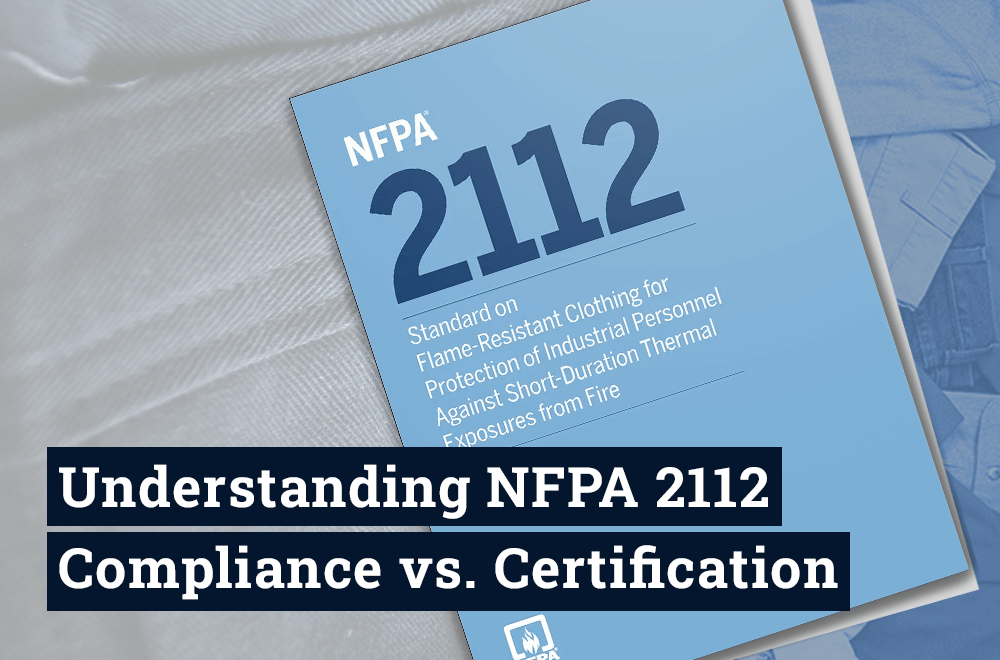
Understanding NFPA 2112 Compliance vs. Certification
September 6, 2024
We’re often asked what the difference is between NFPA 2112 compliance and NFPA 2112 certification. As you may know, NFPA 2112 – the “flash-fire standard” – provides minimum performance criteria and sets clear guidelines for testing flame resistant garments and the components that comprise the garments, such as the fabric or the thread.
Listen in as Tyndale’s Vice President of Technical, Scott Margolin, explains how compliance with NFPA 2112 and NFPA 2112 certification have two entirely different meanings:
What is the Difference Between NFPA 2112 Compliance & Certification?
As Scott explains, the difference between NFPA 2112 compliance and NFPA 2112 certification is straightforward but crucial for ensuring the safety and reliability of protective clothing:
- NFPA 2112 Compliance: This term applies to individual components, such as fabric, that have passed the necessary tests outlined in the NFPA 2112 standard. For instance, a fabric might be labeled as “compliant” with NFPA 2112, meaning it has successfully met the standard’s specific criteria, such as compliance with ASTM D6413, the Vertical Flame Test and other tests that pertain to fabrics.
- NFPA 2112 Certification: Certification, refers to the entire garment, not just its components. To achieve NFPA 2112 certification, the entire garment must be evaluated by an independent third-party organization, typically Underwriters Laboratories (UL). This evaluation ensures that every component of the garment – the fabric, thread, buttons, zippers, etc. – has all of the required documentation to verify it’s been tested correctly to meet or exceed the NFPA 2112 standard.
To summarize, while NFPA 2112 compliance indicates that an individual component meets the safety standard’s requirements, NFPA 2112 certification confirms that an impartial third party has independently verified and approved the entire garment, including all components.
Are Tyndale’s Garments NFPA 2112 Certified?
Tyndale offers a wide variety of protective clothing, and the majority of these garments are NFPA 2112 certified. It’s essential to check your garment’s label to ensure the clothing you wear on the job is providing the required protection for your specific workplace hazard(s). If flash fire is one of those hazards, you’ll need NFPA 2112-certified garments.
Any garment sold by Tyndale with the 2112 label means that the garment is NFPA certified. This is true not only for garments manufactured by Tyndale, but also for all of the AR / FR clothing brands we distribute. We thoroughly vet each brand’s manufacturer to ensure compliance with all applicable industry safety standards.
Bottom line: When you purchase NFPA 2112 certified FR clothing from a trusted supplier, such as Tyndale, you can be confident that each element of the garment has been thoroughly tested – and verified by a third party – to provide the necessary protection required by the industry standard.