




October 30, 2026

Webinar Recap: Tyndale and Safety + Health Magazine Discuss OSHA’s New Arc Flash Guidance
December 20, 2024
OSHA recently released its new arc flash guidance in 20 years, aiming to reduce preventable arc flash injuries amongst commercial, industrial, and residential electricians – with major implications for “de-energized” and low voltage work. Scott Margolin, Tyndale’s Vice President of Technical and Chairman of the Board of the Partnership for Electrical Safety (PES), partnered with Safety + Health magazine to host a webinar exploring the guidance itself, the data behind it, implications for the industry, and the lifesaving difference it will make.
Why did OSHA issue the guidance?
In a previous blog post, we broke down the what, who, where, when, why, and how of this new arc flash safety guidance. Scott expands on these basics in the webinar with a short history lesson.
From the early 1990s to 2010, data shows that compliance rates went up, while injuries and fatalities due to arc flash hazards decreased. This aligns with OSHA’s enforcement of arc flash safety and the addition of NFPA 70E, the Standard for Electrical Safety in the Workplace. However, after 2010, the reduction in arc flash injuries and fatalities flatlines. Meaning, the remaining population not in compliance continues to get hurt or killed. Be sure to watch the recorded webinar for powerful visuals on these data trends. These catastrophic injuries and fatalities are unnecessary and unacceptable. The human, societal, and financial costs are far too enormous.
Why did OSHA act now?
With NFPA 70B’s recent elevation to a standard, the heavy government investment in upgrading the power grid and bolstering EV infrastructure, and the general electrification of America, injuries and fatalities will continue to increase. The time to act is now. By raising awareness and enhancing education, OSHA’s new guidance aims to ensure safe work and good outcomes when arc flash incidents occur.
Why do arc flash injuries and fatalities continue to occur?
OSHA worked closely with industry experts, PES, union leadership, and arc flash survivors to understand the magnitude of the persisting arc flash injuries and fatalities, identify commonalities across incidents, and develop this guidance to help rectify key issues.
The data shows four top causes for the remaining rates of arc flash injuries and fatalities:
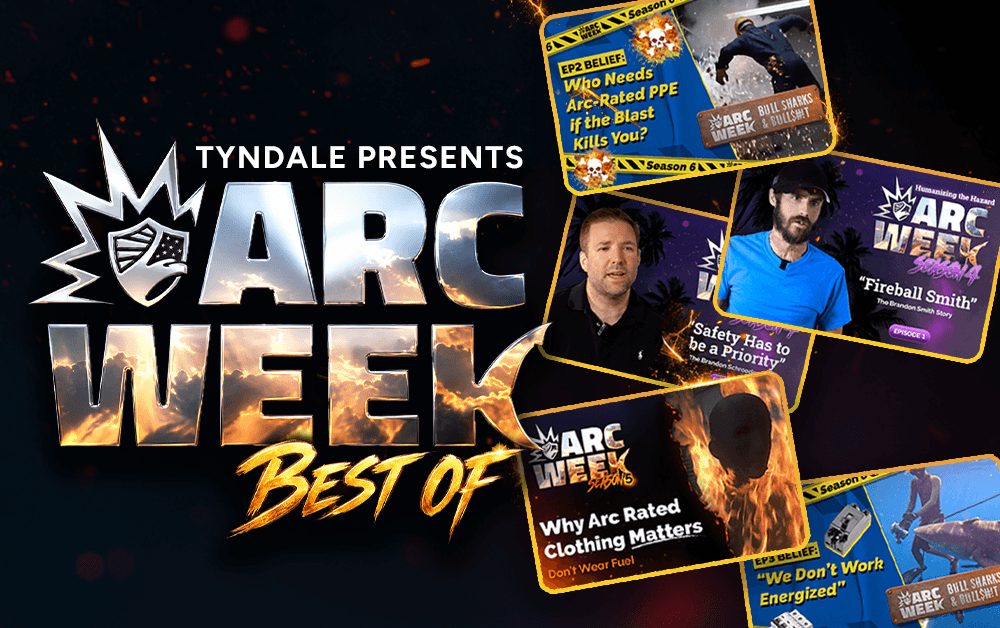
- Working energized without PPE. Many individuals choose to work energized without PPE, knowing they are in violation of NFPA 70E. An entire season of Tyndale’s Arc Week is dedicated to highlighting three arc flash survivors who chose to work energized without PPE – and the lifelong consequences of their choices.
- Thought it was de-energized. The myth of de-energized work is both common and dangerous. To protect yourself, it’s vital that you understand what’s truly de-energized work. Only once ALL steps of OSHA’s Lockout/Tagout (LOTO) and eight steps of NFPA’s Electrically Safe Work Condition (ESWC) are completed, can you work de-energized. De-energizing and re-energizing equipment are both considered energized work.
- Failure to don task-based PPE. Those who have access to task-based PPE only wear AR / FR PPE when needed, instead of wearing AR / FR daily wear all day every day. Though the task-based approach to outfitting workers can be effective, it’s predicated on the gear being available and worn at all the right times. Too often workers continue the job without their task-based PPE, either because it’s in their work truck or they feel pressured to finish the job quickly, etc. Whatever the reason, proceeding without proper PPE can have fatal consequences.
- Improper wear. Improper wear can look like a lot of different things, from shirts not being tucked in, not wearing hard hats, face shields, gloves, or leather keepers, wearing an exposed cotton base-layer, or more. Any of these improper wear scenarios can result in an arc flash burning human skin, causing major injury.
To eliminate these injuries and fatalities, we need to eliminate the myth of de-energized work and only work energized with the proper AR PPE.
How to comply with OSHA’s new guidance?
Master electrician and arc flash survivor Jason Brozen – CESCP and trainer at Tyndale – joined the webinar to share insight on the different uses of risk analysis, his own harrowing arc flash incident which occurred at 120/208 voltage, and how to comply with OSHA’s new guidance and NFPA 70E to keep workers safe, including the use of the Tables Method or the Incident Energy Method.
- Tables Method: The Tables Method, sometimes referred to as the Categories Method, is a more widely used and accessible way to determine what PPE is required for the task at hand. NFPA 70E provides information on the Electric Shock Risk Assessment and the Arc Flash Risk Assessment, which help workers assess the risk and the associated safety measures and/or PPE required to perform the task.
- Incident Energy Method: This method requires an engineer to visit the job site and assess the equipment, using software to calculate its specific incident energy potential and creating a label with corresponding shock protection PPE and arc flash protection PPE required to keep workers safe.
As Jason explains, if a safety risk is present, workers must wear PPE. While there might be an inclination to push back against new government regulation due to confusion or frustration, this new guidance was formed for the safety and health of electricians. PPE is required until proven that PPE is not required. Either method works to determine the level of risk associated with the task at hand and the clothing systems needed to protect against that risk.
What are the key takeaways from OSHA’s guidance?
OSHA’s intention with this guidance is simple:
- Don’t work energized if you don’t have to.
- Recognize what qualifies as LOTO/ESWC.
- Low voltage is NOT low danger.
- Don’t wear fuel.
OSHA reiterates the following information in four different instances across their new arc flash guidance: “Most arc flash burn injuries occur when the arc ignites flammable clothing and not from the arc itself.” AR / FR garments prevent ignition and offer vital insulation against thermal hazards, which is why OSHA states, “…proper AR PPE must always be used.” Safety isn’t just a choice, it’s a requisite.
IF YOU MISSED IT, WATCH THE WEBINAR HERE
Ready to get compliant? Shop an extensive selection of comfortable arc-rated clothing online at TyndaleFRC.com or contact a National Account Executive to start your managed clothing program today.