

Support 24/7
Text 215-766-5665

✕

Support 24/7
Text 215-766-5665

Support 24/7
Text 215-766-5665

✕

Support 24/7
Text 215-766-5665

August 8, 2023

Spin Cycle: Laundering an AR / FR Garment 100 Times and Exposing It to Flammable Lint

Welcome to the fifth and final installment of our Spin Cycle blog and video series. Uniform rental companies claim you can’t launder AR / FR apparel at home, but is that necessarily true? They often suggest that when AR / FR clothing is washed with regular clothing, flammable lint can adhere to […]
March 22, 2023

Dangers of Improper Wear Flash Fire: Episode 6 – Flammable High Visibility Vest & Outerwear Over FRC

Welcome to another episode of The Dangers of Improper Wear and Flash Fire, where Scott Margolin, Tyndale’s Vice President of Corporate Strategy & Technical, takes center stage to shed light on common improper wear mistakes that could result in injury – or worse. This episode highlights how wearing both a […]
March 14, 2023

Dangers of Improper Wear Flash Fire: Episode 5 – Flammable Hoodie Over FRC

Don’t let a Flammable Hoodie be your Downfall Get ready to rethink the way you dress for work. In this episode, Scott walks viewers through a life-threatening scenario where a female manikin wearing flame resistant (FR) pants but a flammable hoodie over her FR clothing is exposed to a flash […]
March 7, 2023

Dangers of Improper Wear Flash Fire: Episode 4 – Consequences of Wearing the Wrong Rainwear

Flame resistant (FR) rainwear that meets the proper ASTM standard is essential for anyone working in an environment with potential flash fire hazards. However, not all rainwear labeled as flame resistant is created equal. Read on to understand why it’s crucial to wear rainwear that meets ASTM F2733: the Standard […]
February 28, 2023

Dangers of Improper Wear Flash Fire: Episode 3 – Flammable Outerwear + Cotton Base Layer

Flash fires are unpredictable and can leave little to no time for people to react. Hence, the right clothing is crucial to protect oneself from intense heat, flames, and potential injury. In this episode of Dangers of Improper Wear: Flash Fire, Scott Margolin, Tyndale’s Vice President of Corporate Strategy & […]
February 22, 2023

Dangers of Improper Wear Flash Fire: Episode 2 – Unzipped FR Coveralls

Flash fires are one of the most dangerous hazards in the workplace, and they can cause serious injuries or even fatalities if proper precautions are not taken. In this blog post, we will discuss the risks of improperly wearing protective clothing – specifically unzipped flame resistant (FR) coveralls – in […]
February 14, 2023

Dangers of Improper Wear Flash Fire: Episode 1 – Wearing Flammable Clothing

Welcome to episode 1 of our Dangers of Improper Wear: Flash Fire blog and video series. Let’s join our guide, Tyndale’s Vice President of Corporate Strategy & Technical, as he explains today’s improper wear topic: wearing flammable clothing – as opposed to flame resistant clothing (FRC) – when exposed to […]
February 7, 2023

Dangers of Improper Wear: Flash Fire

The importance of wearing flame resistant clothing (FRC) to protect against flash fire hazards is widely recognized – you might even be aware of the flash fire standards and test methods. However, knowing how to wear flame resistant clothing properly is not always easily understood. To drive home the importance […]
January 10, 2023

See the Fire, Feel the Heat: New Flash Fire Videos Available Now

Flame resistant clothing (FRC) is an essential form of protection for workers who may be exposed to a flash fire. Among others, flash fire hazards are present in oil and gas and chemical manufacturing settings, as well as manufacturing environments where combustible dust can accumulate. Because the rapidly-moving flame front […]
October 11, 2022

Combustible Dust Series: Part 6 – The Top 5 Factors to Consider for Your FR Clothing Supplier

Now that we’ve learned, in Part 5 of this series, about the key characteristics of NFPA-compliant flame resistant clothing to protect workers against combustible dust hazards, let’s turn our attention to sourcing these garments. Ensuring your workers are protected and compliant with industry standards is not something you want to […]
August 23, 2022

Combustible Dust Series: Part 4 – Is FR Clothing Needed for a Combustible Dust Hazard?

In Part 3 of this series, we learned about the specified methods to mitigate combustible dust hazards, including building design, equipment design, controlling ignition sources, and dust control measures. But what happens if, despite all mitigation efforts, a combustible dust flash fire or explosion occurs? What is the last line […]
August 9, 2022

Combustible Dust Series: Part 3 – What Are the Mitigation Methods for Combustible Dust?

In Part 2 of this series, we learned that NFPA 652, Standard on the Fundamentals of Combustible Dust, provides basic principles and requirements regarding identifying and managing flash fire and explosion hazards due to combustible dust. NFPA 652 requires owners to conduct a Dust Hazard Analysis (DHA) where combustible dusts […]
July 26, 2022

Combustible Dust Series: Part 2 – What Is a Dust Hazard Analysis?

As we learned in Part 1 of this series, catastrophic flash fires and explosions can occur from the ignition of airborne dust composed of material that may not be flammable except when in the form of powder. Recognizing and understanding the potential combustibility of dust present in a facility is […]
July 19, 2022

Women in Power: Candice Onraët’s Strategy for Success in the Oil and Gas Industry

Though women comprise just 22% of the utility workforce compared to 47% in other industries, we’re spotlighting the power of each individual spark to ignite change. Follow along with our Women in Power series as we celebrate and empower women leading the way in a wide range of careers where […]
July 12, 2022

Combustible Dust Series: Part 1 – How Explosive Is Combustible Dust?

In this explosive series, we turn our attention to a potentially deadly hazard prevalent in, but not limited to, manufacturing and processing industries: combustible dust. The series explains what combustible dust is, how the risks are quantified, what a dust hazard analysis entails, and how to mitigate the hazard and […]
July 1, 2022

What is Combustible Dust?

Combustible dust is a hazard that can result in devastating fires, explosions, injuries, and fatalities. According to DustEx Research Ltd., since 2016, when combustible dust incident reporting was first launched, an average of 133 fires, 30 explosions, and 36 injuries per year have occurred per year in the United States […]
July 16, 2021

How Does Tyndale Create Flash Fire Demonstrations?

Tyndale is known for being a leading provider of AR / FR clothing. Did you know we also perform flash fire testing to ensure the FR garments we sell perform as expected under real-world conditions? In today’s FR FAQ, we explore why and how Tyndale creates flash fire demonstrations. You […]
April 13, 2021

How It’s Tested: Episode 14 – ASTM F2733 for Flash Fire Rainwear

Our How It’s Tested series recently covered why ASTM F1891 is the critical compliance criteria specific to arc-rated (AR) rainwear, so this week we’re covering the flash fire rainwear equivalent – ASTM F2733. ASTM F2733 is the standard specification for flame resistant (FR) rainwear for protection against flame hazards. Beware […]
March 23, 2021

How It’s Tested: Episode 11 – The “Other” NFPA 2112 Tests

If you’ve been following our How it’s Tested series, you’re aware of the four (4) main NFPA 2112 tests. But, did you know there are a dozen other tests that help determine garment performance? Today we’re diving into some of these other tests, and explaining why they are so important. […]
March 16, 2021

How It’s Tested: Episode 10 – The Pass/Fail Tests in NFPA 2112

We’re breaking down the various tests in NFPA 2112 for flash fire protection. Now that we’ve taken a closer look at “the Manikin Test” (ASTM F1930) – the most well-known of the tests, we’re turning our attention to the other three main fabric tests in the standard. Scott Margolin, Vice […]
March 9, 2021

How It’s Tested: Episode 9 – ASTM F1930, The Flash Fire Manikin Test

In any environment where you’re at risk of being exposed to a flash fire, you must always stay alert. Keeping aware of your environment, and knowing the flash fire protection standards can save your life in the event of a flash fire. If you work alongside the risk of a flash […]
March 2, 2021

How It’s Tested: Episode 8 – The Basics of NFPA 2112

If you’re working in an environment where you are at risk of being exposed to a flash fire (a sudden, intense fire which is short in duration but severe in potential danger) you should be aware of the flash fire protection standards set in place to keep workers safe. NFPA […]
April 3, 2020

FRC Safety During COVID-19: What to Know When Using Alcohol as a Sanitizer

In these uncertain times, you can rely on Tyndale to provide the latest information on arc rated (AR) / flame resistant (FR) clothing safety during COVID-19. In the post and video below, we talk about what you should know when using alcohol as a sanitizer – and what you should do […]
March 31, 2020

FRC Safety During COVID-19: Dangers of Cheap FRC

You’ve heard the saying, “you get what you pay for,” right? Well, FR clothing is no exception. In fact, buying cheap AR / FR clothing can have the worst consequence of all – it can be deadly. In this post – and in our video featuring Scott Margolin, Tyndale’s VP […]
November 8, 2019

Video: What is Fire?

The dictionary defines fire as ‘a state, process, or instance of combustion in which fuel or other material is ignited and combined with oxygen, giving off light, heat, and flame.’ In this video, given our focus on the Flame-Resistant Clothing (FRC) industry, we look more closely into what is the […]
August 9, 2019

How to Protect Against a Combustible Dust Hazard

Of the many hazards workers can encounter, one that is easily overlooked is combustible dust. This hazard is present wherever materials are manufactured, refined, or re-purposed when dust is created as a byproduct. In certain conditions this dust can create a flash fire which can seriously injure and cause fatalities […]
August 2, 2019

How Long Does a Flash Fire Last?

By definition, a flash fire is a brief thermal hazard that occurs when a flame front moves rapidly through a diffuse fuel cloud, eating up the fuel as it goes. Although recent editions of the standards use the term “brief” rather than attaching a specific duration to the definition, independent […]
July 17, 2019

NFPA 2112 Pass/Fail Test Series Part 4: The Thermal Shrinkage Test

Welcome to our four-part blog series about the pass/fail testing requirements for NFPA 2112 compliance. NFPA 2112 is also known as the “flash-fire standard,” and there are four tests which a garment or fabric must pass to receive this accreditation. Watch Tyndale’s VP of Technical Scott Margolin describe this test […]
June 25, 2019

NFPA 2112 Pass/Fail Test Series Part 3: The Vertical Flame Test

Welcome to our four-part blog series about the pass/fail testing requirements for NFPA 2112 compliance. NFPA 2112 is also known as the “flash-fire standard,” and there are four tests which a garment or fabric must pass to receive this accreditation. Watch Tyndale’s VP of Technical Scott Margolin describe this test […]
June 11, 2019

NFPA 2112 Pass/Fail Test Series Part 2: The Heat Transfer Performance Test

Welcome to our four-part blog series about the pass/fail testing requirements for NFPA 2112 compliance. NFPA 2112 is also known as the “flash-fire standard,” and there are four tests which a garment or fabric must pass to receive this accreditation. Watch Tyndale’s VP of Technical Scott Margolin describe this test […]
May 28, 2019

NFPA 2112 Pass/Fail Test Series Part 1: The Manikin Test

Welcome to our four-part blog series about the pass/fail testing requirements for NFPA 2112 compliance. NFPA 2112 is also known as the “flash-fire standard,” and there are four tests which a garment or fabric must pass to receive this accreditation. They are: The Manikin Test The Vertical Flame Test The […]
November 8, 2018

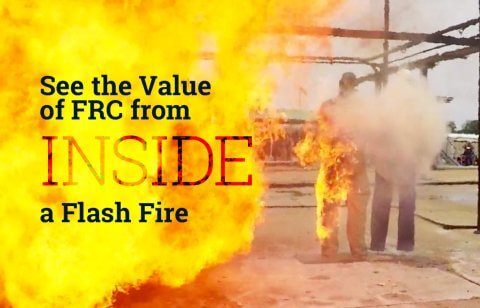
See the Value of FRC from INSIDE a Flash Fire

Surprisingly, there are still people working in environments where a flash fire hazard is present who are not yet convinced they should always be wearing flame resistant clothing. Some believe the risk is overstated. Others believe 100% cotton garments provide all the protection they need. Simply put, they are wrong! […]
October 22, 2018

Do All FR Fabrics Offer Equal Protection?

In an earlier post, we showed you how a Westex DH shirt and pant stacked up against 100% cotton and a cotton/poly blend when it comes to protecting you against a flash fire hazard. The verdict was clear. Wearing non-FR clothing when a flash fire hazard exists could lead to […]
September 13, 2018

Not Wearing FR? See Why You Should.

If you’ve never witnessed a flash fire incident first-hand, it can be difficult to fully appreciate just how important it is to be fully protected by flame resistant clothing on the job. The direct injuries caused by the flames themselves can certainly be serious. But due to the relatively short […]
May 1, 2017

Flash Fire Compliance Versus Protection

When it comes to protecting workers, sometimes compliance takes the spotlight in corporate decision making. If you’re in compliance, your workers are protected, right? This is not necessarily true, particularly when purchasing flame resistant clothing (FRC) for flash fire protection.
August 26, 2016

Does my Rainwear Protect Against Flash Fire Exposures?

ASTM F2733, Standard Specification for Flame Resistant Rainwear for Protection Against Flame Hazards, contains minimum performance specifications and other requirements for rainwear used to protect workers from hydrocarbon or petrochemical flash fires in wet conditions.
June 9, 2014

Overview of API RP 99: Flash Fire Risk Assessment for Upstream Oil/Gas

Among the many dangers oil and gas worker face, flash fire explosions pose one of the most threatening risks. A flash fire is characterized by high temperature, short duration, and a rapidly moving flame front. The NFPA defines flash fire as, “A fire that spreads rapidly through a diffuse fuel, […]
June 4, 2014

Bug Repellent, DEET, and Your FR Clothing

The weather is warming up, which means the concern over pesky insects is growing. You’ll want to stay protected from bugs, but more importantly, remain safe in your FR clothing. As we’ve covered in the past, Tyndale does not recommend applying insect repellent with DEET (N, N-diethyl-meta-toluamide) to flame resistant […]
January 27, 2014

Understanding Protection Against Combustible Dust Hazards

Defining the Hazard According to OSHA, any combustible material can burn rapidly when in a finely divided form. If such dust is suspended in the air in the right concentration, under certain conditions, it can explode. The elements needed for a dust-related explosion include: 1. Fuel (combustible dust) 2. Heat […]
October 25, 2013

Flash Fire Basics and Innovative Product Solutions

What is Flash Fire? Among the many dangers oil and gas workers face, flash fires pose one of the most threatening risks. The National Fire Protection Association (NFPA) defines flash fire as, “A fire that spreads rapidly through a diffuse fuel, such as dust, gas or the vapors of an […]
August 30, 2013

Get Your Copy of Tyndale’s Sample FRC Flash Fire Policy

Are you or your workers at risk of facing flash fires? Navigating the new regulations surrounding the use of FRC to protect against flash fire can be confusing and difficult. We at Tyndale have developed a sample FRC flash fire policy that you can use for your company. Since the […]
August 1, 2013

Flash Fire Rated Garments Complying with OSHA 1910.132 FRC Flash Fire Memo

This is the third post of a four-part series where we cover recommendations for compliance with OSHA 1910.132 FRC Flash Fire Memo.  A second option for garment specification that would meet OSHA 1910.132 standard requirements is to choose garments made from fabrics that are tested according ASTM F1930 at 3 […]
✕