






October 6, 2026
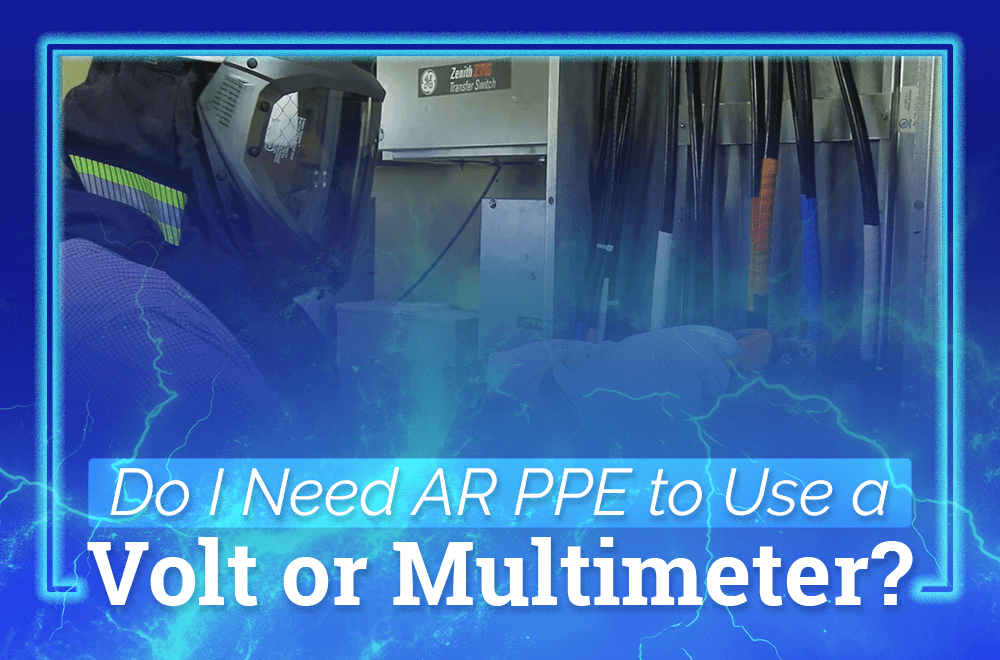
Do I Need AR PPE to Use a Voltmeter or Multimeter?
March 28, 2025
Working on or near electrical equipment almost always requires arc-rated (AR) personal protective equipment (PPE)—even for tasks that may seem routine, like testing voltage with a voltmeter or multimeter.
As part of our Do I Need AR PPE for That? series, we explore this common electrical task and explain what NFPA 70E and OSHA say about arc-rated clothing requirements.
Does NFPA 70E Require AR PPE to Use a Voltmeter or Multimeter?
Yes—if you are testing energized electrical equipment where an arc flash hazard may exist, NFPA 70E requires AR clothing. However, the PPE requirement is determined by hazard exposure, not just from using a voltmeter or multimeter alone.
Tyndale’s Vice President of Technical, Scott Margolin, explains what electricians, maintenance teams, and safety professionals need to know:
Quick Answer: When is AR PPE Required for Voltage Testing?
When approaching a new job and determining the work involved, you need to first perform a risk assessment [NFPA 70E Table 130.5 (C)]—the process by which you analyze risk factors that could cause harm and determine appropriate ways to eliminate the hazard.
When testing voltage, you want to ask:
- If the equipment is energized and you have not verified the absence of voltage
- If you must enter the restricted approach boundary and cross the arc flash boundary
- If you’re exposed to energized parts
If the above conditions apply, arc-flash PPE is required for the work.
Why Testing for the Absence of Voltage Carries Arc Flash Risk
Using a voltmeter or multimeter typically means interacting with energized equipment, which may present the following risks:
- Arc flash and/or shock hazard
- Blast pressure risk
- Thermal burn exposure
Establishing an electrically safe work condition (ESWC), section 110.2 (A) of NFPA 70E, requires you to open an electrical panel and place test tools on energized components, exposing you to incidental energy if a fault occurs. The voltmeter or multimeter you use for testing does not create the hazard—the energized system does.
What NFPA 70E and OSHA Require for Voltage Testing
Before you can safely work on electrical equipment, NFPA 70E requires you to:
- Perform an arc flash risk assessment
- Determine the arc flash approach boundary
- Identify incident energy exposure
- Determine appropriate arc-rated PPE for the hazard level
If you are performing work inside the arc flash boundary while equipment is energized, you must wear arc-rated PPE appropriate for the calculated incident energy. Additionally, shock protection boundaries should be observed and appropriate voltage-rated gloves and other PPE worn, when applicable.
How to Determine the Correct PPE for Electrical Testing
According to the Arc Flash PPE Category Method—Table 130.7 (C)(15)(a)—(“Table Method”), the following steps should be taken to determine the appropriate arc-rated PPE for the task:
Step 1- Identify the task and risk likelihood
Step 2- Determine what equipment and voltage you’re working on
Step 3- Make sure you meet the parameters specified within the table
Step 4- Determine PPE category and arc flash boundaries
Step 5- Pick your PPE system based on Table 130.7(C)(15)(c)
|
Category |
Arc Rating |
|
Category 1 |
Min. arc rating of 4 cal/cm² and has a range of 4-7.9 cal/cm² |
|
Category 2 |
Min. arc rating of 8 cal/cm² and has a range of 8-24.9 cal/cm². |
|
Category 3 |
Min. arc rating of 25 cal/cm² and has a range of 25-39.9 cal/cm². |
|
Category 4 |
Min. arc rating of 40 cal/cm² and has a range of 40+ cal/cm². |
Minimum PPE for Electrical Testing Tasks
Depending on the hazard level, arc-rated PPE protection should include:
- Arc-rated shirt and pants/coveralls
- Arc-rated face shield or hood
- Voltage-rated gloves/leather protectors
- Safety glasses and heating protection
- EH-rated footwear
- Properly rated voltmeter or multimeter
Remember—the arc-rated PPE you wear must exceed the incident energy rating listed on the equipment label or through performance of the Arc Flash PPE Category Method (130.7) (C)(15)(c).
Frequently Asked Questions When Testing Voltage
1. Do I need arc-rated clothing to test voltage?
If the equipment you’re working on is energized and you are working in the arc-flash approach boundary, yes—appropriate AR clothing is required based on the incident energy level.
2. Is using a voltmeter or multimeter energized work?
Yes. Testing for voltage involves interacting with energized parts.
3. What PPE is required?
AR clothing should be worn while testing for voltage, but the type of PPE required should be determined by the arc label on the equipment or incident energy calculation.
4. Does OSHA require AR PPE for testing?
OSHA requires employers to protect workers from electrical hazards on the job. OSHA does not mandate NFPA 70E, specifically, but it is referenced as the industry standard for compliance.
Final Takeaway—PPE is Determined By the Hazard, Not the Tool
Simply holding a voltmeter or multimeter does not require arc-rated PPE. You can determine your PPE need based on:
- If the equipment is energized
- The calculated incident energy risk
- Your proximity to arc flash boundary
When testing voltage, you should always assume the risk of arc flash is present until proven otherwise.
If you or your team is looking for top-of-the-line protection from arc-flash hazards, Tyndale’s arc-rated clothing and additional PPE are designed for protection and comfort. Explore our protective clothing catalog today!
Do I Need AR PPE for That?
Don’t ever go without the proper arc-flash personal protective equipment (PPE) again! This series dives into some of the most common situations in which AR PPE is needed and why. Access all posts in this series to learn more about these situations and how you can best stay protected while working in electrical environments.