




October 6, 2026

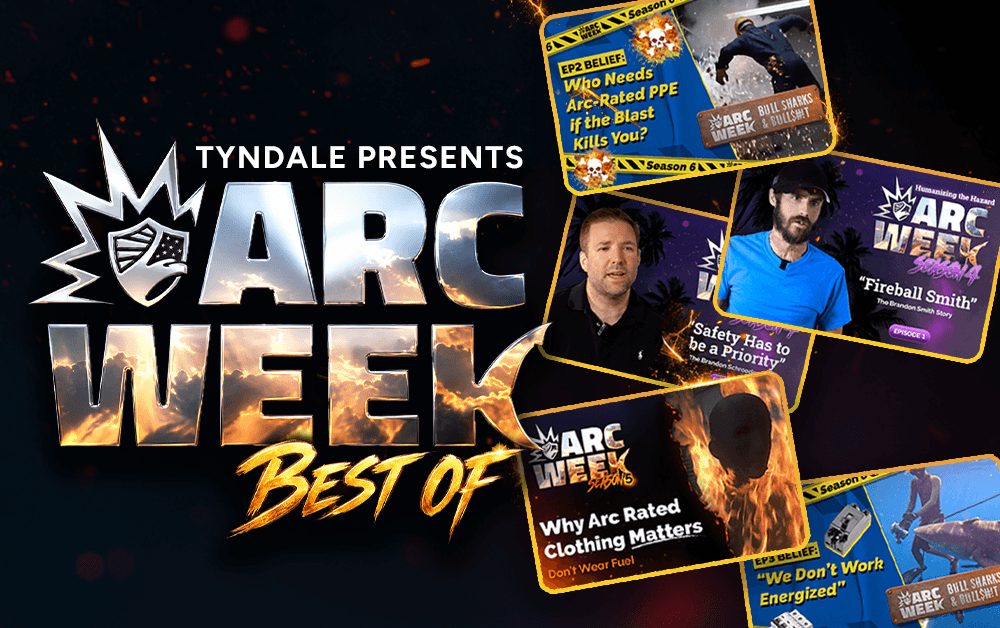
Arc Week Season 6, Ep. 2 – Belief: “Who Needs Arc-Rated PPE If the Arc Blast Kills You?”
August 19, 2025
Tyndale presents Arc Week: a unique, week-long educational look at the world of arc flash hazards through the lens of Shark Week. Join Scott Margolin – our dedicated technical expert by day and passionate shark enthusiast in his free time – for engaging, memorable parallels that bring important lessons about risk protection and PPE to life. Catch it all: Season 1, Season 2, Season 3, Season 4, Season 5, Season 6.
Without question, an arc flash causes a loud bang. But is the resulting shockwave strong enough to blow someone back, damage internal organs, or cause other injuries?
“Arc-rated (AR) PPE is pointless because the arc blast will kill me anyway.” Have you ever heard – or even said – something like this on the jobsite? And is it true? We set out to find out in an independent lab.
To test this belief, we conducted several arc flash tests, using a range of arc incident energies: 3.7, 9.4, 13.7, and 29.2 calories. In each test, we placed a manikin in front of the gear, at the same distance a worker would be in real life.
Did the arc blast cause mortal damage?
No, but our research showed that thermal burns can. That’s why the right AR PPE is so essential.
Across all our tests, none of the manikins were moved by the blast beyond a slight wobble – even at the highest incident energy. In fact, contrary to what some might expect, our research showed that going up in arc incident energy does not necessarily correlate to a larger shockwave.
And keep in mind: the total weight of our clothed manikin and its stand is about 42 pounds – far less than an adult worker, with minimal leverage advantage given by the structure of the support. The manikin is light enough to be knocked over with a two-finger poke in the chest. This means the shockwave’s impacts would be felt even less by a normal adult.
But that’s the lab – what about real life?
- Video Footage: We analyzed footage from real arc flash incidents, and in those cases, the subjects were able to move by their own will during and after the blast – none were thrown or even knocked down. But some were on fire due to the arc flash (not the arc blast).
- Firsthand Accounts: Our own Jason Brozen – master electrician, CESCP, and renown technical trainer – narrowly survived an arc flash incident 14 years into his career that caused major burns requiring skin grafts, seven days in a coma, and weeks in the hospital away from work and his family. As someone who has been there, he reports firsthand that he did not leave his feet or experience any arc blast injuries during his ordeal. This is true of other survivors Jason has met. In fact, across all first person testimonies we’ve heard, including Jason’s, the victims’ injuries were caused entirely by the arc burning exposed skin and/or non-FR clothing igniting and continuing to burn against their bodies.
So will the blast “kill you anyway”?
No, this claim is 100% BS. The blast was insufficient to even move our lightweight manikins – nowhere near strong enough to throw or injure a real adult worker.
But our testing and the firsthand accounts we reviewed underscore a critical truth: the main hazard isn’t the arc blast but the arc flash burning exposed skin and/or igniting flammable clothing.
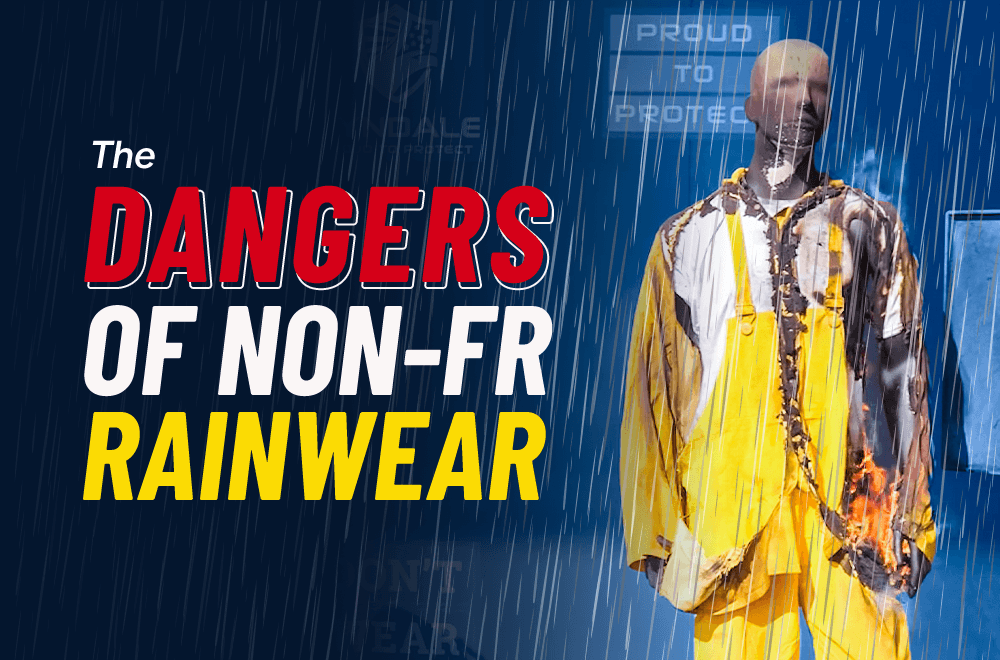
This was showcased in test #2 (9.4 calories), where the manikin is wearing a non-FR vest over an AR coverall. The non-FR vest ignites and continues to burn against the worker even though the coverall underneath self-extinguishes – causing serious injuries despite the shockwave causing none.
The manikins in the other three demonstrations – tests #1, 3, and 4 – were wearing AR PPE and emerged with no fire or burns – a testament to the pivotal role the right PPE plays in saving lives.
Your clothing matters – it can either help or hurt you in an arc flash. Don’t wear fuel!