




October 30, 2026
Why is FR Clothing so Expensive?
September 27, 2024
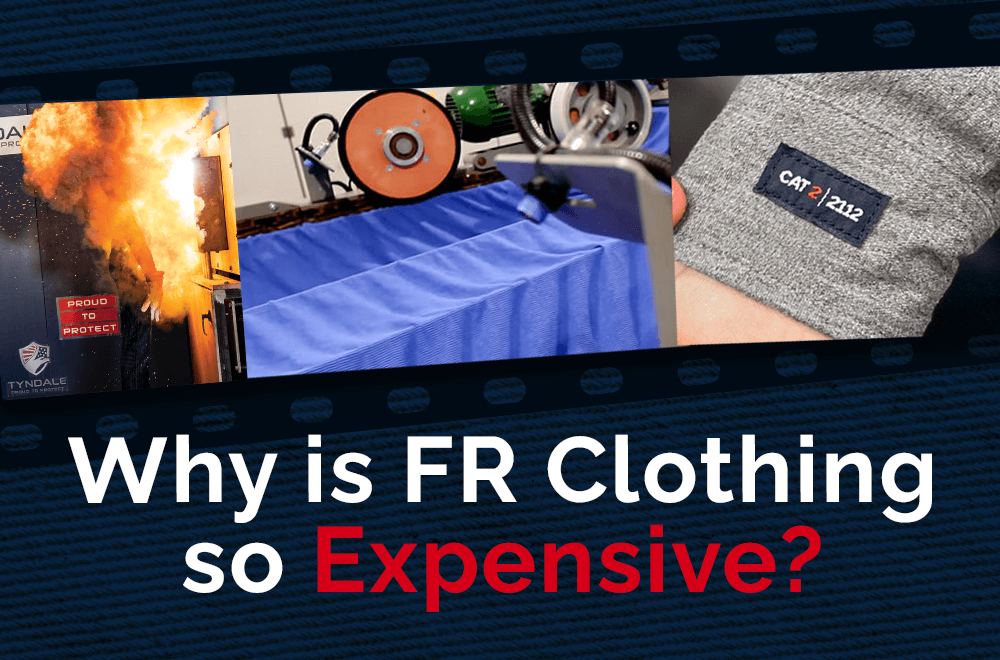
Arc-rated and flame resistant (AR / FR) garments are more expensive than everyday clothing due to the extensive time, resources, and science that go into their design and production. Tyndale’s How It’s Made series offers a detailed look at the process, from fiber and yarn weaving to engineering AR / FR properties and garment manufacturing. At Tyndale, quality is the foundation of every piece of AR / FR clothing we manufacture.
Moreover, reputable AR / FR suppliers like Tyndale ensure that each garment undergoes rigorous testing to guarantee performance in the event of an arc flash or flash fire. This process is thoroughly covered in seven episodes of our How It’s Tested series. The specialized production and testing of AR / FR clothing directly impacts the final price of the garment, as well as the AR / FR properties of the fabric. These fabrics are self-extinguishing, meaning they do not ignite, melt, or continue to burn once the heat source is removed. Your safety and compliance are our top priority, which is why we responsibly manufacture and partner with leading brands to distribute high-quality AR/FR garments that meet industry standards and our own stringent expectations of quality.
To manage the cost of AR / FR clothing, many companies in the industrial, electrical, and oil industries turn to managed apparel programs to outfit their workers in AR / FR garments. Managed apparel programs allow employees to purchase AR / FR garments using a company-funded allowance. This ensures strict budgetary control for the company and choice and compliance for wearers. According to OSHA, outfitting a new employee in AR / FR clothing from scratch should include a first-year allowance of approximately $1,200, especially if additional protective items like outerwear, boots, or other personal protective equipment (PPE) are required.
Watch the video below, as Tyndale’s Vice President of Technical, Scott Margolin, discusses the typical allowance a single employee can expect:
What is the typical allowance per employee for AR / FR clothing?
As Scott explains, the typical allowance per employee for AR / FR clothing varies based on several factors. If the employee is new to the managed program and lacks AR / FR clothing, they may require a larger allowance to cover essentials like outerwear, boots, and additional PPE, such as hard hats and gloves. However, for employees already participating in the program and who have built up a collection of AR / FR garments, the allowance is typically lower.
Once employees have participated in a managed apparel program for over a year, the annual allowance often decreases from OSHA’s recommended $1,200 to around $600. This reduction occurs because AR / FR garments are designed to be durable and do not typically wear out within a year. Over time, the allowance is more than adequate to keep wearers in quality AR / FR clothing.
Managed apparel programs are highly beneficial for employees working in industries requiring AR / FR clothing. We recommend companies utilizing AR / FR suppliers periodically reassess the allowance amount to account for inflation and ensure workers remain safe, comfortable, and able to maximize their purchasing power.