



October 30, 2026

How It’s Made: How to Make AR / FR Fabric in Three (3) Steps
November 3, 2020
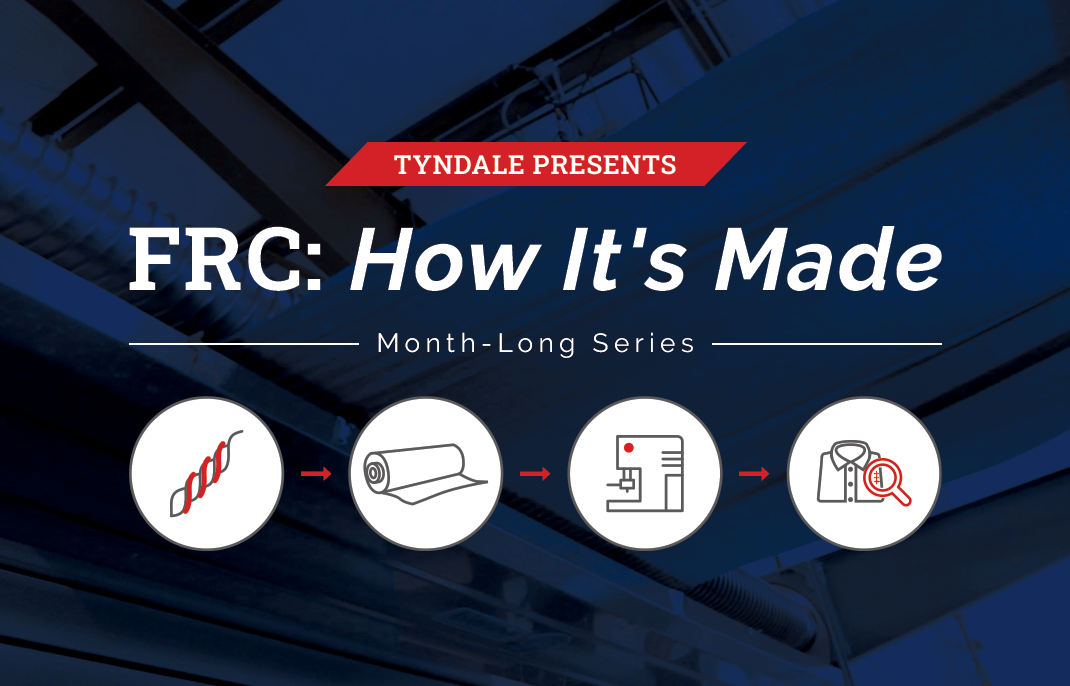
Our How It’s Made series gives you a “behind the ‘seams’” look at everything that goes into making the life-saving clothing you wear every day: from fiber, to yarn, to fabric, to finished garment, and the science that imparts flame resistance along the way – all with videos and commentary from industry experts.
This is the first post in our series, FRC: How Its Made. In this post we’ll make our way through the fiber generation, yarn spinning, and fabric weaving processes to see how fibers are transformed into fabric that’s used to make arc-rated and flame resistant clothing (known as “AR / FR clothing” or simply “FRC”).
Tyndale’s Vice President of Technical quickly compiles the key information needed to understand the manufacturing process for AR / FR fabric:
Step 1: Fiber Generation Process
In general, synthetic fibers are created by extruding fiber-forming materials, which begin as a molten polymer solution, through spinnerets in a chemical process called polymerization. Wondering what a spinneret is? Simply put, a spinneret is a cap or plate with a number of small holes through which a fiber forming solution is forced. This process looks similar to water running through a showerhead. The resulting filament is continuous, so it must be cut, and often crimped, to resemble cotton fibers. From that point on, the processes used for both synthetic and natural fibers are similar. The fibers then go through a carding process, a mechanical process that disentangles, cleans, and orients fibers in parallel to produce a soft, rope-like strand of fibers called a sliver (sly-ver).
Step 2: Yarn Spinning Process
The next step in the fabric making process is spinning the yarn. Yarn is spun directly from the sliver of fibers. To spin the yarn, slivers are pulled, drawn, and twisted at high speed. Twisting is an important part of the process – the higher number of twists per inch, the stronger the yarn. The finished product is a continuous length of interlocked fibers spun into yarn, ready for the weaving process.
Step 3: Fabric Weaving Process
Weaving is the process of joining the yarns together. By interlacing the first set of yarn (“the warp set”) with the second set of yarn (“the weft set”) at right angles to one another, the two are woven together on a loom to make fabric. It’s important to note that the type of loom used to create the fabric is a key component in the formation of the woven fabric. The formation and style of woven fabric directly affects a fabric’s look, feel, and some aspects of comfort. The type of loom used also determines the width of the fabric. Fabric width is an important factor to consider when cutting garment components to ensure limiting fabric waste. Once the fabric has been created, some fabrics begin undergoing the engineering of their flame resistance, and go through many additional steps including desizing, scouring, mercerizing, and dying.
Watch episode 2 to dive into the details of engineering flame resistance and how FRC is specially designed to protect workers from workplace hazards.